OL Research supplies research materials exclusively for laboratory use. All products are handled and distributed in accordance with UK regulations governing research chemicals. We do not advise, support or condone the use of research chemicals in humans or animals.


Original price was: £38.00.£34.20Current price is: £34.20.
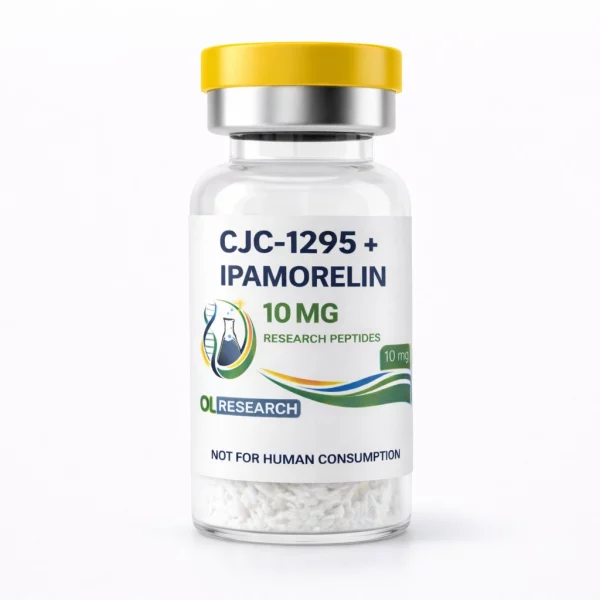
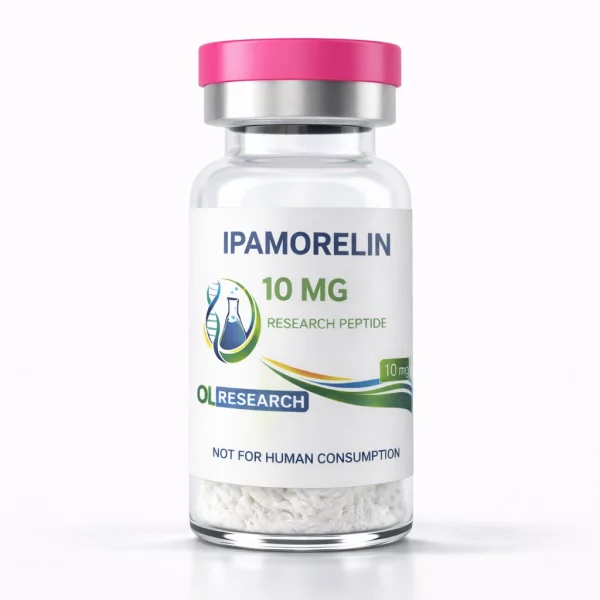
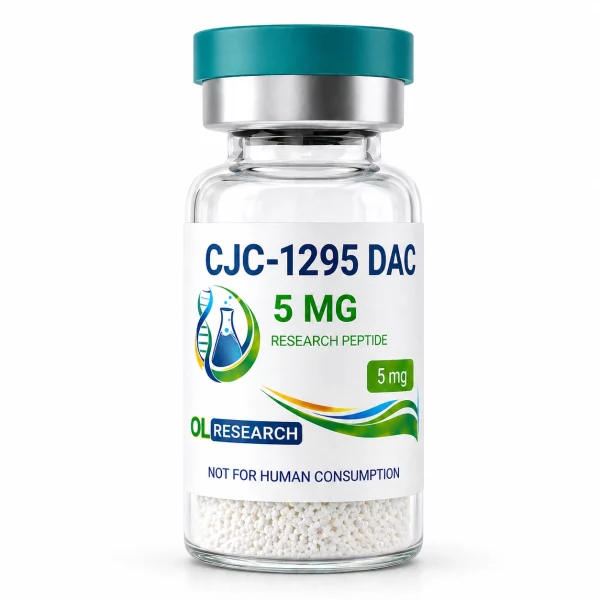
CJC-1295 No DAC + Ipamorelin 10mg — a combined GHRH/GHRP research blend studied for synergistic growth hormone secretion. Each compound at ≥99% purity. UK-dispatched by OL Research.
 ✓
✓
In stock
Every batch is independently HPLC-tested at ≥98% purity. Drop your email and we'll send the latest certificate within one working day.
This combination formulation pairs two complementary growth hormone secretagogues — CJC-1295 No DAC (Modified GRF 1-29), a GHRH analogue, and Ipamorelin, a selective GHRP — into a single research compound studied for synergistic stimulation of pulsatile growth hormone release.
Unlike CJC-1295 DAC, the No DAC variant has a short half-life (~30 minutes), closely mimicking the natural GH release pattern. Combined with Ipamorelin’s selective ghrelin receptor agonism, this pairing is one of the most widely referenced dual-peptide protocols in GH secretagogue research.
Supplied as a lyophilised solid at ≥99% purity, UK-dispatched by OL Research. For laboratory and in-vitro research use only.
| Compounds | CJC-1295 No DAC (Modified GRF 1-29) + Ipamorelin |
| Total Quantity | 10mg (5mg each compound) |
| CJC-1295 No DAC CAS | 863288-34-0 |
| Ipamorelin CAS | 170851-70-4 |
| Form | Lyophilised solid |
| Purity | ≥99% (HPLC verified, both compounds) |
| CJC-1295 No DAC Half-life | ~30 minutes |
| Ipamorelin Half-life | ~2 hours |
| Storage | 2–8°C refrigerated; protect from light and moisture |
| Reconstitution | Sterile water or bacteriostatic water (laboratory use) |
| Origin | UK-dispatched by OL Research |
| Use | In vitro / laboratory research only |
CJC-1295 No DAC is a 29-amino acid analogue of endogenous growth hormone-releasing hormone (GHRH 1-29). The “No DAC” designation distinguishes it from CJC-1295 with Drug Affinity Complex, which extends half-life to ~8 days via albumin binding. The No DAC version retains the short, sharp GH pulse profile that mirrors endogenous secretion — making it the preferred variant in studies where maintaining natural pulsatility is the experimental variable.
Ipamorelin is a pentapeptide GHRP with high selectivity for the GHS-R1a receptor. Relative to earlier GHRPs, it is notable in research for its clean selectivity — stimulating GH release with minimal co-stimulation of ACTH, cortisol, or prolactin. This makes it a useful tool for isolating GH-specific effects in multi-variable research protocols.
The two mechanisms are complementary rather than redundant: GHRH analogues prime the pituitary for GH release while GHRPs trigger the release signal. Research consistently demonstrates that combined administration produces GH pulse amplitudes significantly greater than either compound alone — a core reason this pairing dominates the published GH secretagogue literature.
What is the difference between CJC-1295 No DAC and CJC-1295 DAC?
The DAC (Drug Affinity Complex) modification extends half-life to approximately 8 days via albumin binding, creating sustained GH elevation. The No DAC version has a ~30-minute half-life, producing sharp GH pulses that mirror natural secretion. Research protocols requiring pulsatile GH typically use No DAC; those studying sustained GH elevation use DAC.
Why is Ipamorelin preferred over GHRP-2 or GHRP-6 in research?
Ipamorelin exhibits greater selectivity — it stimulates GH release with minimal impact on cortisol, prolactin, or ACTH secretion. GHRP-2 and GHRP-6 both produce stronger co-stimulation of these hormones, which complicates studies attempting to isolate pure GH pathway effects.
What purity standard is supplied?
≥99% for both compounds, verified by HPLC. Certificate of analysis available on request.
How should it be stored?
Refrigerated at 2–8°C in lyophilised form. Stable for 12+ months under proper conditions. Reconstituted solution should be stored at -20°C; minimise freeze-thaw cycles.
Is this product for human use?
No. Supplied strictly for in-vitro and laboratory research. Not a medicine, supplement, or food product.
⚠️ For laboratory and in-vitro research use only. Not for human consumption, veterinary use, or any clinical application. OL Research products are supplied in compliance with UK regulations governing research compounds.
Only logged in customers who have purchased this product may leave a review.



Join our research community and get 20% off your first order. Exclusive offers, new products and research updates direct to your inbox.
No spam. Unsubscribe anytime. Privacy Policy.

gwen –
pretty new to the research field of peptides but this website has been an active lifesaver in getting them